Friday, May 16, 2014

The crossover: Cambridge to Bukavu

It's been six years since I lived in Entebbe and posted on this blog. Megan and I have been in Bukavu for six days now and, since we'll be here for the next year, insh'Allah, (and because we just had lunch at a fancy hotel with relatively fast internet) I decided to resuscitate it. 
We're here because I just started as a research fellow with the Development Economics Group at Wageningen University (WU). Megan's looking for work in environmental policy research or university-level math teaching (so please holler if you have any leads). While we look for an apartment we're staying at Chez Mundi, a large house, really a complex, in the middle of Bukavu. Mundi coordinates the Universite' Catholique de Bukavu's collaborations with several Belgian and Dutch universities. His home has at least eight bedrooms, a backup generator, reliable (albeit slow) internet, and, until a truck ran into a water main two days ago, running water. His wife, mother, and seven beautiful children ranging in age from around 3 to 21 live at the house. The kids are usually on their laptops. When Megan and I arrived we were with two profs and a PhD student from WU. In addition to our squad, two Belgian profs, a Congolese prof, and a Belgian med student were also staying at Chez Mundi. Over dinner the first night one of the Belgian profs claimed that half of DRC prefers dry sex while the other half prefers wet sex, and that there are herbs, "easy to find", to facilitate either style.   
On a completely different note, here's the view from our bedroom:

We spent the first two days in meetings with directors or agronomists from the six Congolese agricultural NGOs with whom we're working, through the International Institute of Tropical Agriculture, on a DFID-funded, ESRC-coordinated, RCT to test the effectiveness of a package of seeds, fertilizer and inoculants as part of the Gates-funded N2Africa project. Megan valiantly took minutes of the proceedings, which were almost entirely in French. I understood about 50%.

On the fourth day, after Janneke and Lonneke went back to Holland, Koen showed us around town. When we found AI on the wall of a barbershop, I had to get a photo:

Ballin is universal.

Saturday, June 6, 2009

Witch Hunts and Foul Potions Heighten Fear of Leader in Gambia

By ADAM NOSSITER Published: May 20, 2009 NYTIMES

...To the accompaniment of drums, and directed by men in red tunics bedecked with mirrors and cowrie shells, dozens, perhaps hundreds, of Gambians were taken from their villages and driven by bus to secret locations. There they were forced to drink a foul-smelling concoction that made them hallucinate, gave them severe stomach pains, induced some to try digging a hole in a tiled floor, made others try climbing up a wall and in some cases killed them, according to the villagers themselves and Amnesty International.

http://www.nytimes.com/2009/05/21/world/africa/21gambia.html?sq=gambia&st=cse&scp=2&pagewanted=all


Wednesday, April 2, 2008

Who is that rising in you? How many wafers did you eat last Sunday?

Someone who I’ve never met, the sister of a friend of mine, sent me the following message today. (It should be noted that in Ugandan SMS culture it’s commonplace to find lengthy, pensive text messages):

"Do u know dat christ’s death wasnt easy at al, he was beaten nd tortured, denied aplace among his pple, pple spitted on him, every sort of evil word was said nd al sorts of accuzations were made, BUT WHY? bse he saw it worthy 2 save me nd u, indeed his death wasnt easy bt it was worthy. Christ paid d price, lets be glad nd rejoice 4 we a free indeed. Happy easter may d risen christ rise in u too."

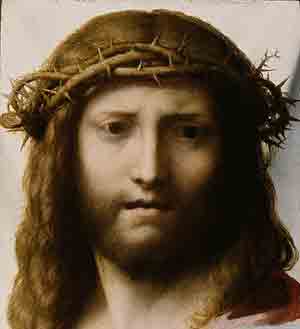
A couple weeks ago in Apac I participated in the following exchange with Robert, a young Ugandan and fellow mosquito-catcher. I had wondered out loud why all the pictures of Jesus in the restaurant where we were eating portrayed Our Lord and Savior as if he were from Norway.

Me: “I was raised in a secular household. We didn’t go to church.”
Him: “In America? There are secular people in America?”
Me: “Yeah, there are a lot.”
Him: “Like 10,000 or 20,000?”
Me: “Probably more like 50 million.”
Him: “In America? But there are so many missionaries that come here!”
Me: “Yeah…”

"Let there be IKEA."

"No, Officer, I don't smell anything."

We returned to Kampala just as Mummar Gadaffi, Libya’s dictator for the last 40 years, was inaugurating the huge ultramodern mosque that he paid for, the humbly-named Gadaffi National Mosque. While in town he also delivered a lengthy speech in which he called Yoweri Museveni and Robert Mugabe “true African revolutionaries”, and urged them to never retire. He went on to say that a constitution is “just a piece of paper” and what’s important is “the will of the people” (which has nothing to do with how they vote). As the cherry on top of his self-serving cupcake, he claimed that someone had deleted the name of Prophet Muhammad from the text of the Bible and as such the Book is a forgery and the genuine Bible needs to be found.

http://www.monitor.co.ug/artman/publish/sun_news/Gadaffi_ignorant.shtml

Honkies are being recruited to smuggle drugs in and out of Kampala. Did someone say supplemental grant writing?
http://www.monitor.co.ug/artman/publish/insights/How_K_la_has_become_a_drug_lord_s_paradise.shtml

"Smoking or chewing Marijuana is the main cause of mental disorders which are soaring at an alarmingly high rate in the country."
Yes, and masturbation makes hair grow on your palms.
http://www.monitor.co.ug/artman/publish/news/Uganda_leads_in_marijuana_growing.shtml


The War On Drugs: another fine American example for the world to follow.

http://www.monitor.co.ug/artman/publish/oped/Uganda_must_take_drug_trade_seriously.shtml

Tuesday, January 15, 2008

Don’t Get Afterbirth On My CDs, Please

Verse two, comin with that Olde E brew

Meth-tical, puttin niggaz back in I.C.U.

We left Lake Mburo and headed towards the Rwandan border. At the crossing, men with wads of Rwandan Francs approached the SUV looking for a deal. I disembarked and officially signed us out of Uganda in a small tin-roofed shack. On the other side we got our passports stamped and assured Rwandese officials that we hadn’t come from Ebola-infested Bundibugyo.

I expected to find in Rwanda a slightly degraded version of Uganda; I assumed that visible traces would remain of the genocidal civil war 13 years ago during which 1 out of 10 people were murdered by their neighbors. Instead, we drove into a superficially upgraded version of Uganda. The homes and people looked much the same, but there were differences presumably due to the efficiency of a near totalitarian government in a small country: smooth roads free of potholes, motorcyclists wearing helmets, hedges along the hills to prevent erosion. Less easily explicable, people’s gardens were more colorful and well-tended.

All along the road people walked in twos and threes, uphill and downhill. Many carried water in those still-ubiquitous yellow plastic jugs. My co-pilot, L, claimed that the rolling green hills behind them have twins in China.

To reach Akagera National Park we turned onto a descending dirt road. By that point we’d been in the SUV long enough for a vague sensation of the U.S.A. to have settled into my skin, perhaps linked to an anesthetic pumped out by the A/C. I ate cookies and spoke unrestrained American English. The Grateful Dead sang of sharing women and wine. We rambled on contentedly in our metal and plastic cocoon.

In my contented daze I noticed something peculiar about yet another group of people walking on the side of the road. It was larger than the others and moving with haste. A few people together carried something of considerable weight. I stopped chewing long enough to dumbly mumble “Wonder what’s going on there…”

L, a physician with experience in rural Zimbabwe, recognized the situation instantly. “Someone is sick. They’re carrying him to the hospital.”

“They’re walking to the hospital we passed ten minutes ago? Jesus. It’s uphill the whole way.”

“You want to go back and give them a lift?” The idea hadn’t occurred to me. Did Newton’s Laws permit us to reach behind the windshield-shaped TV screen and pull someone into our 15-miles-per-gallon living room? Confucius smirks:

Seeking a foothold for self,
love finds a foothold for others;
seeking light for itself,
it enlightens others too.
To learn from the near at hand
may be called the clue to love.

I slowly lowered my foot onto the brake pedal. “Uh…yeah…yeah…we should go back and give them a lift. It would be the Christian thing to do.”

We turned around and pulled up alongside the crowd of about twenty people. Four young men in the lead carried a stretcher made of bamboo and palm leaves on their shoulders. A human form sagged inside. I rolled down the window and leaned out as if to request a cheeseburger with fries, biggie-sized, and large Coca-cola with extra ice. Rwandese unhappy meals came rushing in: heat, odor, panicked voices. I addressed the nearest stretcher-bearer:

“Parlez-vous Anglais?” No response.

I tried an alternate method.“Ogenda wa?” [Luganda: Where are you going?] Nothing.

Then, in my impersonation of a French accent, “Hospital?” Affirmation all around.

We got out of the car and set about clearing the back seat of all luxury: a box of books and CDs, name brand backpacks, head lamps, extra shoes, a 2 liter 7-Up bottle, L’s toiletry bag containing no less than ten tubes of various creams and lotions. During this process she somehow ascertained that the woman in the stretcher, the woman now being held up on wobbly legs by two men, was pregnant, with apparent complications. L laid a pathetically small dish towel on the backseat and said “We may have to deliver in the car.” Right. I’ll be ‘round back having an upchuck.

A team of four hauled the pregnant woman into our improvised ambulance. She half-sat, half-lay in the middle of the back seat, supported by a woman who could have been her older sister. Next to them, crammed farthest inside, a barefoot man in a sport coat decided for unknown reasons to crawl across everyone to exit rather than open the door to which his back had been pressed.

With three people and the mother-to-be remaining inside the vehicle, we were ready to roll. I gently closed the back door, climbed behind the steering wheel and, leaning forward, accelerating gently, began the meandering climb up to the hospital. A quick calculation of the risk of flipping the SUV or plunging into the roadside drainage ditch or plowing over small children on swervy bicycles versus the urgency of transporting a grimacing woman full of baby and baby juice to the delivery room yielded an optimal speed of 50 km per hour, plus or minus ten.

I accelerated less gently. L turned around in her seat to say “It’s OK, Mama.” Mama moaned. I glimpsed her head being stroked in the rearview mirror.

We reached the first of several goddamned speed humps. Mama moaned louder. Children shouted “Muzungu! Muzungu!” oblivious to our precious cargo.

The drive was taking longer than I’d expected. “How far back is the [Shoulder Angel: “Don’t say ‘goddamned’”] hospital?”

“It must be just ahead. We can’t miss it – it’s too big.”

My foothold on the gas pedal deepened further still. Energetically waving kids faded into clouds of dust. A white sedan came flying down the hill and I honked it over to where the other lane would have been, had there been lanes.

“There’s the hospital,” I said as I missed the turn. Throwing the vehicle into reverse, I let the engine stall out. “Jesus Christ.” [Shoulder Demon: “Let him have it, motherfucker!”] Eventually we came to halt under the awning of the hospital entrance.

Scanning the many faces milling about the entryway, I was comforted by the sight of a woman with a nametag. “Hello” I said.

“Hello” she answered back. Praise the Lord.

“This woman is pregnant,” I said.

Suddenly another name-tagged individual appeared, a rather burly fellow in a navy blue clinician’s coat. “You need to move your vehicle.”

“This woman is pregnant,” I repeated.

“You need to move your vehicle forward.” He gestured to the drain running under the SUV. I had no idea what he was talking about.

“Can we take out the pregnant woman first?”

The parking attendant posing as a medic then moved past me and actually managed to shut the door on Mama’s legs as her friends were helping her out. At this L’s nostrils flared, but she retained her professional calm. Annunciating carefully, she said, “Please put this woman in a wheel chair and then we will move the vehicle.” He continued to point to the drain while someone else arrived with a wheelchair. Mama slid into it and was immediately whisked into the building, her friends following closely behind.

We finally moved the vehicle forward and then just kept right on going, back down the winding hill, over the humps, past the people and homes and storefronts, and into the unpopulated savanna of Akagera National Park. Over the next two days we did what you do in a game park while Mama did what you do in a delivery room. I looked to my distant cousins for the answers to all of this. To the zebra: “Where did you get your stripes?” To the giraffe: “Why is your neck so long?” To the buffalo “How did you get so thick?” But only the hippopotamus gave me a response.

“Hippo, why you so phat?”


Yo I gets rugged as a motherfuckin carpet get

And niggaz love it, not in the physical form but in the mental

I spark and they cells get warm

I'm not a gentle, man, I'm a Method, Man!

Baby accept it, utmost respect it

(Assume the position) Stop look and listen

I spit on your grave then I grab my Charles Dickens

Thursday, January 10, 2008

Gimme an O

from today's Daily Monitor (Kampala):

"US Democrat candidate Barack Obama phoned Kenya's opposition leader Raila Odinga to express grave concern over the election outcome."
[Kivuitu is the chairman of Kenya's Electoral Commission. ODM is Odinga's party]

If the dialogue above is too small, it reads:
Obama: "Cousin, sorry about your votes. Clinton did a 'Kibaki' on me here as well...but I'm not rioting!"
Odinga: "I'm very sorry cousin..but are you sure your electoral commission didn't 'Kivuitu' your votes?!"


Excerpts from Andrew Sullivan’s argument that Obama is the only escape from the Baby Boomer infighting that, beginning with Vietnam, has driven American politics in an ever-tightening downward spiral

http://www.theatlantic.com/doc/200712/obama

What does he offer? First and foremost: his face. Think of it as the most effective potential re-branding of the United States since Reagan. Such a re-branding is not trivial—it’s central to an effective war strategy. The war on Islamist terror, after all, is two-pronged: a function of both hard power and soft power. We have seen the potential of hard power in removing the Taliban and Saddam Hussein. We have also seen its inherent weaknesses in Iraq, and its profound limitations in winning a long war against radical Islam. The next president has to create a sophisticated and supple blend of soft and hard power to isolate the enemy, to fight where necessary, but also to create an ideological template that works to the West’s advantage over the long haul. There is simply no other candidate with the potential of Obama to do this. Which is where his face comes in.

Consider this hypothetical. It’s November 2008. A young Pakistani Muslim is watching television and sees that this man—Barack Hussein Obama—is the new face of America. In one simple image, America’s soft power has been ratcheted up not a notch, but a logarithm. A brown-skinned man whose father was an African, who grew up in Indonesia and Hawaii, who attended a majority-Muslim school as a boy, is now the alleged enemy. If you wanted the crudest but most effective weapon against the demonization of America that fuels Islamist ideology, Obama’s face gets close. It proves them wrong about what America is in ways no words can.

The other obvious advantage that Obama has in facing the world and our enemies is his record on the Iraq War. He is the only major candidate to have clearly opposed it from the start. Whoever is in office in January 2009 will be tasked with redeploying forces in and out of Iraq, negotiating with neighboring states, engaging America’s estranged allies, tamping down regional violence. Obama’s interlocutors in Iraq and the Middle East would know that he never had suspicious motives toward Iraq, has no interest in occupying it indefinitely, and foresaw more clearly than most Americans the baleful consequences of long-term occupation.

This latter point is the most salient. The act of picking the next president will be in some ways a statement of America’s view of Iraq. Clinton is running as a centrist Democrat—voting for war, accepting the need for an occupation at least through her first term, while attempting to do triage as practically as possible. Obama is running as the clearer antiwar candidate. At the same time, Obama’s candidacy cannot fairly be cast as a McGovernite revival in tone or substance. He is not opposed to war as such. He is not opposed to the use of unilateral force, either—as demonstrated by his willingness to target al-Qaeda in Pakistan over the objections of the Pakistani government. He does not oppose the idea of democratization in the Muslim world as a general principle or the concept of nation building as such. He is not an isolationist, as his support for the campaign in Afghanistan proves. It is worth recalling the key passages of the speech Obama gave in Chicago on October 2, 2002, five months before the war:

"I don’t oppose all wars. And I know that in this crowd today, there is no shortage of patriots, or of patriotism. What I am opposed to is a dumb war. What I am opposed to is a rash war … I know that even a successful war against Iraq will require a U.S. occupation of undetermined length, at undetermined cost, with undetermined consequences. I know that an invasion of Iraq without a clear rationale and without strong international support will only fan the flames of the Middle East, and encourage the worst, rather than best, impulses of the Arab world, and strengthen the recruitment arm of al-Qaeda. I am not opposed to all wars. I’m opposed to dumb wars."

…The best speech Obama has ever given was not his famous 2004 convention address, but a June 2007 speech in Connecticut. In it, he described his religious conversion:

“One Sunday, I put on one of the few clean jackets I had, and went over to Trinity United Church of Christ on 95th Street on the South Side of Chicago. And I heard Reverend Jeremiah A. Wright deliver a sermon called “The Audacity of Hope.” And during the course of that sermon, he introduced me to someone named Jesus Christ. I learned that my sins could be redeemed. I learned that those things I was too weak to accomplish myself, he would accomplish with me if I placed my trust in him. And in time, I came to see faith as more than just a comfort to the weary or a hedge against death, but rather as an active, palpable agent in the world and in my own life.

It was because of these newfound understandings that I was finally able to walk down the aisle of Trinity one day and affirm my Christian faith. It came about as a choice and not an epiphany. I didn’t fall out in church, as folks sometimes do. The questions I had didn’t magically disappear. The skeptical bent of my mind didn’t suddenly vanish. But kneeling beneath that cross on the South Side, I felt I heard God’s spirit beckoning me. I submitted myself to his will, and dedicated myself to discovering his truth and carrying out his works. “

To be able to express this kind of religious conviction without disturbing or alienating the growing phalanx of secular voters, especially on the left, is quite an achievement. As he said in 2006, “Faith doesn’t mean that you don’t have doubts.” To deploy the rhetoric of Evangelicalism while eschewing its occasional anti-intellectualism and hubristic certainty is as rare as it is exhilarating. It is both an intellectual achievement, because Obama has clearly attempted to wrestle a modern Christianity from the encumbrances and anachronisms of its past, and an American achievement, because it was forged in the only American institution where conservative theology and the Democratic Party still communicate: the black church.

Obama is deeply aware of how he comes across to whites. In a revealing passage in his first book, he recounts how, in adolescence, he defused his white mother’s fears that he was drifting into delinquency. She had marched into his room and demanded to know what was going on. He flashed her “a reassuring smile and patted her hand and told her not to worry.” This, he tells us, was “usually an effective tactic,” because people

"were satisfied as long as you were courteous and smiled and made no sudden moves. They were more than satisfied; they were relieved—such a pleasant surprise to find a well-mannered young black man who didn’t seem angry all the time."

And so you have Obama’s campaign for white America: courteous and smiling and with no sudden moves.

…To be black and white, to have belonged to a nonreligious home and a Christian church, to have attended a majority-Muslim school in Indonesia and a black church in urban Chicago, to be more than one thing and sometimes not fully anything—this is an increasingly common experience for Americans, including many racial minorities. Obama expresses such a conflicted but resilient identity before he even utters a word. And this complexity, with its internal tensions, contradictions, and moods, may increasingly be the main thing all Americans have in common.


Saturday, December 22, 2007

Lake Mburo: where hippo nightmares come true

My plan over the holidays was to take a bus to Rwanda. Then I met an American with an SUV. We hit the road on 22 December, headed southwest from Kampala. After two hours we crossed the equator, marked by a 7 ft tall wooden circle and a series of "science experiments" to demonstrate that water does indeed spiral down in the opposite direction once you cross the line.

Shortly thereafter I took my first turn behind the wheel. Potholes, pedestrians, pedalers, peddlers and fucking gigantic buses triggered a flashback to my glory days with Mario Kart and Rock 'n Roll Racing.

Some Ankole cows heard that the iPhone was on sale at the community well:

If the Vikings had been able to make helmets out of horns like that then Leif Ericsson would be on the $1 bill.

By the grace of Krishna we made it to our first stop, Lake Mburo National Park, without harming man nor beast. The warthogs and impala showed more consideration for our vehicle than the cows. We set up camp by the lake.


I cooked pasta in the campfire and prayed to Mohammad that the hippos would keep their fat asses off our tent when they came onshore for nocturnal grazing.

At dawn the next morning we went for a stroll with a machine-gun toting park ranger, Jeffrey. The gun was for African Buffalo (also called Cape Buffalo) - all of the lions were killed by the cattle owners. The buffalo also have horns that would make a Viking moist.


Jeffrey explained that the best thing to do if you encounter a buffalo and you aren't carrying a machine-gun is to lie down and play dead. The buffalo will lick the living shit out of you with her rough tongue, but she won't be able to get her horns into you and fling you to the side like dirty underwear.


Friday, December 7, 2007

Entering Bureaucrats Outweigh Lowly Africans?

Was Ebola kept under wraps to ensure that CHOGM proceeded as planned?

I met her in a club down in Bundibugyo

Where you eat jackfruit and it tastes just like cherry-cola

C-o-l-a

Cola

She walked up to me and she asked me to dance

I asked her her name and in a dark brown voice she said Ebola

E-b-o-l-a

Ebola

bo-bo-bo-bo-bola

Well I’m not the worlds most physical guy

But when she squeezed me tight she nearly caused serious symptoms, such as diarrhea, dark or bloody feces, vomiting blood, red eyes due to distention and hemorrhage of sclerotic arterioles, petechia, maculopapular rash, and purpura and other secondary symptoms such as hypotension, hypovolemia, tachycardia, organ damage as a result of disseminated systemic necrosis, and proteinuria. The interior bleeding is caused by a chemical reaction between the virus and the platelets which creates a chemical that will cut cell sized holes into the capillary walls. After several days the person will die literally of "a million cuts."

Hot on the heels of CHOGM, Ebola has arrived in Uganda for the first time since 2001. So far 93 cases have been confirmed, resulting in 22 deaths. The timing of the outbreak’s official announcement has provoked accusations that the government withheld information from Bundibugyo district (on the border with DRC in western Uganda) in order to avoid alarming foreign delegates that came to Uganda for CHOGM last month. Cases of unexplained febrile illness have been documented in Bundibugyo since September, and Marburg virus, which belongs to the same family, Filoviridae, was documented back in July. In the government’s defense, there are approximately one gazillion potential causes of febrile illness in this part of the world, and this strain of Ebola has not shown all of the typical symptoms, nor has it produced 90% mortality rates as occurred in DRC in 2003. Furthermore, diagnosis is delayed by the fact that samples must be shipped out of Uganda for diagnosis. So, it may be reasonable to need two months to confirm that a virus is indeed Ebola. Then again, it may not. The question remains: Were Ugandan lives sacrificed to ensure that the conference would proceed without a hitch?

Starting tomorrow, UVRI may be able to prevent such desperate and delayed decision-making. The institute will become the second institution in Africa capable of diagnosing Ebola (the other is in Gabon). A team from CDC Atlanta is here modifying one of the labs in order to meet – just barely – the recommended safety standards. It will be an important step for Uganda to reduce its reliance on other nations and for UVRI to move towards the operational excellence it was known for prior to the wars in the mid-1980s.

Lost of course in all the Ebola hub-bub is the everyday epidemic of malaria.
Assuming that the 100,000 annual deaths in Uganda attributable to malaria are spread evenly throughout the year, then roughly 1,900 Ugandans have died from malaria since the Ebola outbreak was announced on 30 November. Malaria didn't scare the CHOGM delegates because it is primarily a disease of the poor. If you live in a shoddy house, you don't have a bednet and you don't buy newer medication to which Plasmodium isn't resistant, then you are likely to fall victim. That was the case in the southern U.S., Italy and many other places before the widespread DDT campaign in the 1950s and 1960s concurrent with the construction of better-sealed homes.