Monday, August 18, 2014

Let the artefactual field experiments begin!

The first project I was involved in here was an evaluation of Dutch funding to Congolese NGOs. We want to know if the NGOs did stuff that improved the lives of Congolese people (Like massages? No, like help with farming or schooling). To find out, we carried out a survey of about 1,000 households in about 100 villages in Uvira Territory and Fizi Territory in the Province of South Kivu (of which Bukavu is the capital). That required recruiting 35 research assistants. We put up signs at l’Université Catholique de Bukavu (UCB), sent out emails, and called people in our database. Altogether we collected about 120 CVs. We invited the most promising 60 to take a tablet-based general intelligence test with questions like, “If you add every third number between 1 and 50, is the result odd or even?” The top 40 from the test were invited to two weeks of in-class training. Here’s the group on Day 1 in a classroom at UCB’s new campus:

And here’s a view from the back of the class:

We went over the tablet-based questionnaire again and again:


And went through practice scenarios:


The training was so long because the survey included behavioral games a.k.a artefactual field experiments (AFEs) (by those who don’t play no games), which are tools for measuring trust, risk preferences, time preferences, and other characteristics for which self-reports may be unreliable. This survey had two AFEs. In an AFE to measure trust, the interviewee was given six laminated cards with a bushel of corn on one side and 500 FC (500 Congolese Francs is about 55 cents) on the other side. She was told that they could donate as many or as few as they want to a randomly selected member of their village, but they wouldn’t find out who, and neither would the recipient ever know their identity. NOW HERE’S THE KICKER: each bushel of corn that the interviewee donates becomes THREE bushels of corn (it’s, like, an investment). And THEN, after the corn multiplies, the anonymous receiver can send as much or as little back to the anonymous sender. Get it? The wealth-maximizing choices would be for the interviewee to send all six, which become 18 (18*500FC = 9000 FC = $10 USD), and then for the receiver to send back nine. That requires trust on the part of the interviewee. 
In the AFE to measure risk preferences, the interviewee was asked to choose one of six lotteries. Each lottery had two outcomes, each with a probability of 0.5. The interviewee would literally put her hand into a bag with a black ball and a white ball and pull one out. In the least risky lottery, both the white and black ball yield 4000FC (~$4.5 USD). In the most risky lottery, the white ball yields 1400FC (~$1.5 USD) and the black ball yields 8200 FC (~$9 USD). So the expected value of the riskiest lottery is 1400*.5 + 8200*.5 = 4800 FC. Thus, if an interviewee chooses the least risky lottery, she is giving up 800FC (almost $1 USD) in exchange for less uncertainty about the outcome. To see how intra-household bargaining influences risk preferences, we asked husbands and wives to play separately and then together.
In a country where the average daily income is roughly $1USD, these AFEs involve significant decisions, so, the theory goes, they should reveal interviewees’ true preferences. I was a little weirded out at first by the idea of asking subsistence farmers to play games with money, but two factors help assuage my concerns: first, it’s impossible to lose money. Every interviewee receives 1000FC in addition to the payout of one randomly selected AFE, and none of the AFEs involve losses (you can only win less). Interviewees could make up to 10,000FC (~$11USD). Second, village life has been described as boring by more than one villager, and it’s possible that these bizarre AFEs would be kinda fun. It’s also possible, though, that the stress of making these choices involving relatively large amounts of money outweighed the benefits. In my next post I’ll write about how it all turned out. 

Monday, July 28, 2014

The massacre at Mutarule

Megan and I have just returned from two weeks in Uvira and Fizi supervising (along with four other colleagues) a survey of about 1,000 households. My next few blog posts will be about that. But first I want to post something about the massacre at Mutarule on June 6.

Mutarule is a village about 6 hours drive from Bukavu. We passed it on the way down to Uvira. Everyone in the car recognized it immediately because of the graves by the side of the road:


On the evening of June 6, 33 people were killed in Mutarule, most of them in a church that was burned down while they were inside. Here's what's left of the church:  


The massacre was only the latest in a long series of violent incidents between the people in the area who have farms (the Bafuliro) and the people who raise cattle (the Barundi). If that sounds similar to the Hutu-Tutsi conflict, it's because it is. The fact that this is all still happening 20 years after the 1994 genocide is hard to believe...although when one considers what's going on in Israel and Palestine, it's clear that conflicts like this don't end quickly.

There are many people trying to figure out how can these communities reach a mutual understanding that peace will bring greater well-being to everyone involved. I'll post about that work as I learn more about it. To that end, if anyone has recommendations for people to contact or articles to read, please let me know.  

Sunday, June 8, 2014

In and out of the flow

How different are Bukavu and Cambridge, really? Teenagers wear skinny jeans and flat-billed hats. Professors talk too much.  Kids play with balls. In the stores you’re offered a plastic bag with your purchase. Just when you think that life here is the same as life there, you walk into a difference.

One of my favorite things to do anywhere is to walk where there are no cars. So I really enjoy the shortcut close to our house that connects our street, Ave Nyofu, with a street about 100m above it, Ave Lumumba. The ascent begins with a small wooden bridge over a trickle of water and waste. Usually there’s a man just beyond selling charcoal and wearing a golf cap. “Bonjour! C’est comme en Europe!” he says to us without fail. After passing him, one enters a narrow corridor with just enough space for one stream of humans to climb while another descends. As one climbs, there’s a brick wall 4m high to the left and to the right there are three wooden shacks with their entrances facing the corridor. In front of each shack there’s a grill and a young man tending to sizzling meat. Then, climbing still, there are stone steps in the red dirt that lead into a covered passage, the narrowest, final part of the short-cut. One passes under a tailor’s shop and out into the street.

It was there in the final covered passage, one day last week, when I noticed something had happened. First of all, the stream of humans had stopped, something that never happens normally, and blocked my entrance into the passage. I said “Excusez-moi” and started to gently push through the crowd. There was a man breathing heavily and rapidly to my left, but I didn’t see him well because I was watching several people in front of me who were pointing at the wall and speaking animatedly in Swahili. They were pointing at a divot or small hole. I noticed also that there was a large crowd at the end of the short cut.  

The short cut ends on one side of a very busy road with a large market on the other side. The sound of horns is constant. Motorcycles weave through taxi-vans, white NGO SUVs, and SUVs of color that belong to the rich. On the sidewalk yet more motorcycles wait for customers, crowds of people walk for their daily errands, and street vendors sit at their wooden tables under advertising-laden umbrellas. Some of these vendors sell Congolese francs for American dollars. The American dollars have to be pristine – no tears, no writing. The exchange rate has been 900 francs to the dollar for the last four years. These franc vendors sit with piles of 500 franc notes on their tables waiting for customers. Since arriving here I’d marveled at their confidence being in the open air with so much money.

On the day of interest, at the end of the short cut, pushing through the crowd in the covered passaged, I came upon the large crowd previously mentioned. The crowd was gathered around a one of the franc vendor’s wooden tables. There was no umbrella, no money, and no vendor, just a table with a bright red smear of blood across the surface.
I’m not used to seeing blood, and crowds in poor countries make me nervous, so I walked away a few meters. I asked someone what happened. “They killed him.”

That seemed to be enough information for now, so I took a taxi to l’Universite’ Catholique de Bukavu as planned. There, I asked our Congolese colleague Janvier if he’d heard what had happened. “Of course! Last night even.”
“Yes? So what happened?”
“The vendor was shot last night at 20h.”
“Did they catch the guy?”
“No. And they even killed his friend a few months ago.”

Over the next couple days a crowd remained around the table, no doubt sharing stories about what had happened. On the second day someone taped a photocopy of a picture of the victim on the concrete storefront behind his blood-smeared table. “Jean Katabisimwe. 1989-2014.” By the third day the picture and the crowd were gone and the steams of humans flowed through the short-cut just like they had before. 

Saturday, May 31, 2014

Megan in Africa!

By popular demand, this post will feature mostly pictures of Megan. 
Megan's first night in Africa: at Chez Lando in Kigali after a long flight from Amsterdam to Istanbul to Kigali.


Megan and my colleague, Koen, as we depart from Day 1 of our workshop at the International Institute of Tropical Agriculture just outside of Bukavu.


Sorry, no Megan in the next picture. During the workshop representatives from each of the six Congolese agriculture-focused NGOs who distribute improved seeds, fertilizer and inoculants as part of N2Africa were asked to describe their theory of change as to what results such distribution would produce, and how. I'm holding one group's description while the NGO rep explains. Koen is taking notes on the projected screen.


Friday, May 16, 2014

The crossover: Cambridge to Bukavu

It's been six years since I lived in Entebbe and posted on this blog. Megan and I have been in Bukavu for six days now and, since we'll be here for the next year, insh'Allah, (and because we just had lunch at a fancy hotel with relatively fast internet) I decided to resuscitate it. 
We're here because I just started as a research fellow with the Development Economics Group at Wageningen University (WU). Megan's looking for work in environmental policy research or university-level math teaching (so please holler if you have any leads). While we look for an apartment we're staying at Chez Mundi, a large house, really a complex, in the middle of Bukavu. Mundi coordinates the Universite' Catholique de Bukavu's collaborations with several Belgian and Dutch universities. His home has at least eight bedrooms, a backup generator, reliable (albeit slow) internet, and, until a truck ran into a water main two days ago, running water. His wife, mother, and seven beautiful children ranging in age from around 3 to 21 live at the house. The kids are usually on their laptops. When Megan and I arrived we were with two profs and a PhD student from WU. In addition to our squad, two Belgian profs, a Congolese prof, and a Belgian med student were also staying at Chez Mundi. Over dinner the first night one of the Belgian profs claimed that half of DRC prefers dry sex while the other half prefers wet sex, and that there are herbs, "easy to find", to facilitate either style.   
On a completely different note, here's the view from our bedroom:

We spent the first two days in meetings with directors or agronomists from the six Congolese agricultural NGOs with whom we're working, through the International Institute of Tropical Agriculture, on a DFID-funded, ESRC-coordinated, RCT to test the effectiveness of a package of seeds, fertilizer and inoculants as part of the Gates-funded N2Africa project. Megan valiantly took minutes of the proceedings, which were almost entirely in French. I understood about 50%.

On the fourth day, after Janneke and Lonneke went back to Holland, Koen showed us around town. When we found AI on the wall of a barbershop, I had to get a photo:

Ballin is universal.

Saturday, June 6, 2009

Witch Hunts and Foul Potions Heighten Fear of Leader in Gambia

By ADAM NOSSITER Published: May 20, 2009 NYTIMES

...To the accompaniment of drums, and directed by men in red tunics bedecked with mirrors and cowrie shells, dozens, perhaps hundreds, of Gambians were taken from their villages and driven by bus to secret locations. There they were forced to drink a foul-smelling concoction that made them hallucinate, gave them severe stomach pains, induced some to try digging a hole in a tiled floor, made others try climbing up a wall and in some cases killed them, according to the villagers themselves and Amnesty International.

http://www.nytimes.com/2009/05/21/world/africa/21gambia.html?sq=gambia&st=cse&scp=2&pagewanted=all


Wednesday, April 2, 2008

Who is that rising in you? How many wafers did you eat last Sunday?

Someone who I’ve never met, the sister of a friend of mine, sent me the following message today. (It should be noted that in Ugandan SMS culture it’s commonplace to find lengthy, pensive text messages):

"Do u know dat christ’s death wasnt easy at al, he was beaten nd tortured, denied aplace among his pple, pple spitted on him, every sort of evil word was said nd al sorts of accuzations were made, BUT WHY? bse he saw it worthy 2 save me nd u, indeed his death wasnt easy bt it was worthy. Christ paid d price, lets be glad nd rejoice 4 we a free indeed. Happy easter may d risen christ rise in u too."

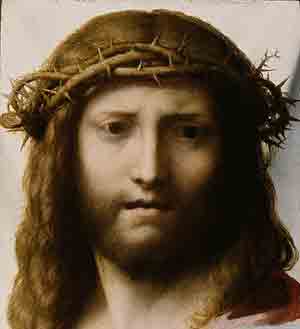
A couple weeks ago in Apac I participated in the following exchange with Robert, a young Ugandan and fellow mosquito-catcher. I had wondered out loud why all the pictures of Jesus in the restaurant where we were eating portrayed Our Lord and Savior as if he were from Norway.

Me: “I was raised in a secular household. We didn’t go to church.”
Him: “In America? There are secular people in America?”
Me: “Yeah, there are a lot.”
Him: “Like 10,000 or 20,000?”
Me: “Probably more like 50 million.”
Him: “In America? But there are so many missionaries that come here!”
Me: “Yeah…”

"Let there be IKEA."

"No, Officer, I don't smell anything."

We returned to Kampala just as Mummar Gadaffi, Libya’s dictator for the last 40 years, was inaugurating the huge ultramodern mosque that he paid for, the humbly-named Gadaffi National Mosque. While in town he also delivered a lengthy speech in which he called Yoweri Museveni and Robert Mugabe “true African revolutionaries”, and urged them to never retire. He went on to say that a constitution is “just a piece of paper” and what’s important is “the will of the people” (which has nothing to do with how they vote). As the cherry on top of his self-serving cupcake, he claimed that someone had deleted the name of Prophet Muhammad from the text of the Bible and as such the Book is a forgery and the genuine Bible needs to be found.

http://www.monitor.co.ug/artman/publish/sun_news/Gadaffi_ignorant.shtml

Honkies are being recruited to smuggle drugs in and out of Kampala. Did someone say supplemental grant writing?
http://www.monitor.co.ug/artman/publish/insights/How_K_la_has_become_a_drug_lord_s_paradise.shtml

"Smoking or chewing Marijuana is the main cause of mental disorders which are soaring at an alarmingly high rate in the country."
Yes, and masturbation makes hair grow on your palms.
http://www.monitor.co.ug/artman/publish/news/Uganda_leads_in_marijuana_growing.shtml


The War On Drugs: another fine American example for the world to follow.

http://www.monitor.co.ug/artman/publish/oped/Uganda_must_take_drug_trade_seriously.shtml